
The "Switch" is On! Why Switchgrass is Our New Favorite Bedding & Mulch (And Your Garden’s Best Friend)
Hello, fellow animal lovers and green thumbs! 🌾🐾
If you’ve been hanging around the farm lately—or scrolling through our social media messages—you know there is one topic that keeps popping up: Switchgrass. We get it. Choosing the right bedding for your animal companions is a big deal. You want them to be cozy, you want the barn to smell fresh, and let’s be honest, you don’t want to be fighting a mountain of used bedding that takes ten years to disappear. And for all of you gardeners out there, finding a mulch that keeps your plants gorgeous and productive is always a top priority during our short growing seasons.
Native Ontario Switchgrass (Panicum virgatum) Growing in a Field
This is how the grass looks in its natural habitat before it is harvested and processed into bedding.
Well, pull up a chair and let’s have a heart-to-heart about why we’ve officially fallen for switchgrass, why it’s worth the extra loonies, and how it’s basically "garden gold" in the making.
Local Love: Supporting Ontario Roots
At Fancy Farmerettes, our commitment to the environment and our animals is the heartbeat of everything we do. That’s why we are so proud to locally source Ontario-grown and processed switchgrass, which has been chopped and de-dusted so that it's a premium product that is ready for our customers to use as bedding and garden mulch. Supporting local isn't just a buzzword for us—it’s about community. Sourcing a native Ontario grass that is grown nearby in Ontario soil means we are supporting our local economy and reducing our carbon footprint at the same time.
"Wait, Why is it More Expensive Than Wood Shavings?"
Let’s talk about the elephant (or the horse?) in the room: Price. 💰
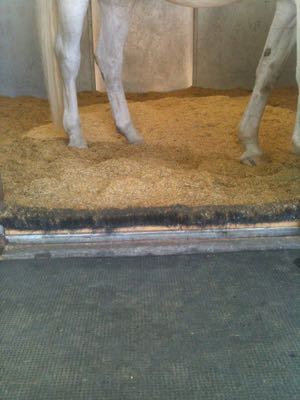
If you’ve looked at the price tags, you’ll notice switchgrass bedding is a bit more of an investment than traditional pine shavings. We want to be totally transparent with you about why.
As a distributor, Fancy Farmerettes doesn't grow or process the grass ourselves. Instead, we buy in bulk so we can retail it to you, the general public. This involves significant costs for us—specialized storage to keep it bone-dry, the time it takes to manage inventory, and of course, the ever-rising expense of shipping. We all feel the "cost of living" squeeze these days, and moving bulky materials like bedding is no exception!
However, switchgrass is a value-added product. Unlike raw straw or basic wood shavings, this material is chopped and dust-extracted (seeds removed). That extra processing is what makes it safe for your animals' sensitive lungs (and yours!). Additionally, during the retting and de-dusting process, most of the seeds are removed from the switchgrass. Unlike straw mulch, which often sprouts up new growth when spread on fields and garden beds, switchgrass sits quietly, allowing your plants to flourish without competition. In the end, you aren't just buying "grass"; you’re buying a cleaner, healthier environment.
The Science of "Happy Paws & Healthy Lungs"
The switchgrass science is in! According to researchers at OMAFRA and REAP-Canada, switchgrass is a powerhouse:
Absorbency: It can hold up to 2.5 to 3.7 times its weight in moisture. That means fewer wet spots and a much easier time mucking out, as urine clumps into dry masses that can easily be removed.
Low Dust: Because it’s harvested after it has naturally "retted" (dried) in the field and then processed to remove fine material, it is a breath of fresh air for horses or chickens with respiratory issues.
Safety First: Research from REAP-Canada (led by Roger Samson) has shown that switchgrass is an incredibly stable, non-toxic bedding choice for everything from dairy cows to our smallest furry companions.
Compostable: And, of course, switchgrass is a natural native prairie grass that decomposes beautifully. When mixed with animal manure, it turns into a rich soil amendment that disappears back into the earth.
From Bedding to "Garden Gold"
As gardeners and micro-farmers, we fully understand the fatigue of weeding garden beds. No one wants to spend time weeding. Ever. And this is where switchgrass comes in as a primo mulch for your prized perennials, potted plants, and vegetable plots.
When applied to garden beds, the chopped, fibrous strands of switchgrass naturally interlock and "cross-hatch," creating a dense, stable mat. This physical barrier is far more resistant to being displaced by wind or heavy rain than wood shavings, ensuring consistent coverage that blocks the sunlight required for weed seeds to germinate.
If we compare switchgrass to conventional wood-based mulches, switchgrass is the stand-out champion in retaining soil and plant health, too! Wood mulches have a high carbon to nitrogen ratio, which means nitrogen in your soil is being diverted to break down the wood mulch rather than feeding your plants. Conversely, switchgrass is nitrogen-neutral, meaning that as it decomposes, it won't deplete essential nutrients from your soil. The nitrogen in your soil gets used where it should be--to feed your precious plants.
What's more, gardeners will fall in love with switchgrass as a mulch because it's soft on your hands and provides a clean, aesthetic cover for vegetable and flower beds that resists rapid decomposition throughout the growing season. That's right, switchgrass decomposes slowly so you don't have to reapply as frequently as wood mulches.
Switchgrass Animal Bedding from TSP Biomass
This shows the final, processed product—chopped and de-dusted, ready for use in stalls and enclosures, as well as gardens.
And it's not just for backyard gardeners! Large-scale agricultural producers—like Ontario’s strawberry farmers—are switching to switchgrass mulch. According to the Ontario Biomass Producers Co-operative (OBPC), switchgrass mulch provides superior winter insulation for strawberry crowns and helps suppress weeds better than wheat straw because it doesn't carry the same weed-seed load.
Whether you’re a home gardener or a commercial farmer, this stuff is a win-win for soil health.
The Bottom Line
Yes, switchgrass costs a little more. But when you factor in the health of your animal companions, the support for local Ontario business, and the fact that switchgrass outcompetes traditional garden mulches, we think the choice is clear.
Got questions? Want to see a sample in person? Drop us a line or swing by the farm. We love talking shop!
Stay green, The Fancy Farmerettes Team 🌸🐄

Annotated Bibliography: The Science of Switchgrass
1. Ministry of Agriculture, Food and Agribusiness (OMAFA) – Factsheet #23-055
Title: Alternative Bedding Materials for Livestock
Publication Date: September 15, 2023
Summary: This updated factsheet by engineers Rajan Niraula and Benoit Lebeau provides a comprehensive guide for Ontario producers looking to transition away from traditional bedding like wood shavings and straw.
Why it Matters:
Absorbency Data: It provides the scientific "Absorbency Factor" (AF) for various materials. While traditional wheat straw has an AF of 2.1, many processed switchgrass products hit or exceed this mark, offering superior moisture control.
Health Standards: It specifically discusses particle size and bacteria counts. It notes that materials like switchgrass, when properly processed and de-dusted, minimize the surface area for bacterial growth compared to finer sawdust, which can stick to animal skin and teats.
Environmental Impact: As an OMAFA-backed resource, it validates switchgrass as an environmentally responsible choice that integrates perfectly into manure management systems, breaking down faster than wood products once land-applied.
2. REAP-Canada: Switchgrass Production & Utilization Guide
Link: REAP-Canada Online Library
Annotation: Written by Roger Samson and the team at Resource Efficient Agricultural Production (REAP) Canada, this is the definitive guide on switchgrass in a Canadian context. It details the "retting" process—allowing the grass to overwinter—which reduces mineral content and makes the fiber softer and more absorbent for animal bedding use.
3. OBPC & Ontario Forage Network: Switchgrass/Miscanthus as a Sustainable Mulch
Link: Sustainable Mulch Research Paper (PDF)
Annotation: This research paper, supported by the Ontario Biomass Producers Co-operative (OBPC), focuses on horticultural applications. It specifically discusses the benefits for strawberry and garlic growers, noting that switchgrass mulch stays in place better than straw, offers superior weed suppression, and provides excellent winter insulation for delicate crops.
/END